
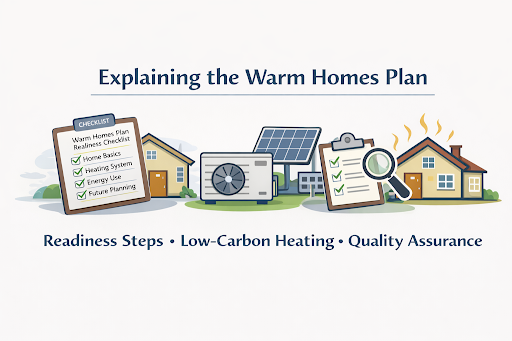
The UK’s Warm Homes Plan has been billed as the most ambitious home energy efficiency programme Britain has ever seen. Warmer homes. Lower bills. Long-term investment in cleaner energy. All good things, if delivered well. It is also backed by a £15 billion investment commitment focused specifically on heat pumps and heat networks, signalling a major shift in how homes will be heated in...
Read More

If you have heard the term district heat network zoning but are not sure what it means, the easiest way to understand it is to start with district heating itself.
District heating works differently from traditional building-by-building heating systems. Instead of every building running its own boiler or heat pump, heat is generated centrally and distributed through insulated pipes to multiple...
Read More

For many years, the CP1 Heat Networks Code of Practice shaped how heat networks were designed, delivered and operated across the UK. It brought structure to a growing sector and helped establish a shared understanding of what good looks like in practice.
However, CP1 has always been voluntary. While it is widely referenced and frequently written into briefs and funding conditions, it is not a...
Read More

The Heat Networks (Market Framework) Regulations move heat networks from voluntary codes to a statutory regime. The rules are designed to protect consumers, support investment and give clear responsibilities to organisations that own and operate district and communal heat networks.
What is the Heat Networks Market Framework?
The framework sits within wider energy legislation that creates a...
Read More

In the push towards a decarbonised and more efficient energy landscape, the UK government is implementing a series of major changes to the heat network sector. One of the most significant of these is the upcoming Heat Network Technical Assurance Scheme (HNTAS). If you are a developer, operator, or stakeholder in a heat network project, understanding HNTAS isn't just a good idea; it's soon to...
Read More

The UK government's Heat Network Efficiency Scheme (HNES) is designed to improve the performance of existing district and communal heat networks and maximise carbon savings. The scheme provides grant funding to address sub-optimal performance, to reduce consumer heating costs and carbon emissions.
What is HNES?
HNES is a £77 million grant programme that supports improvements to heat...
Read More

The Green Heat Network Fund (GHNF) is a government initiative designed to accelerate the decarbonisation of heating in England. This capital grant scheme plays a crucial role in supporting the development of new, low and zero-carbon heat networks and the expansion and decarbonisation of existing networks.
At Sustainable Energy, we have provided full application support to secure over £35m of...